


Many devotees admire the Ram Darbar for its beauty, but few realise how every aspect follows centuries-old rules of iconography (shilpa shastra). The arrangement, body language, emotions, and ornaments are intentionally crafted to convey deeper spiritual teachings.
In this research-backed guide, we explore symbolic elements most people overlook, the hidden messages embedded in traditional Ram Darbar idols.
Who Appears in the Ram Darbar?
A traditional Ram Darbar includes:
-
Shri Ram – Dharma, righteousness, balance
-
Mata Sita – Purity, compassion, inner strength
-
Lakshman – Duty, service, unwavering loyalty
-
Hanuman – Devotion, humility, strength guided by bhakti
This divine grouping reflects the ideal household, spiritual order, and the values every devotee aspires to embody.
1. Shri Ram’s Posture - Calm Strength without Aggression
In almost all Ram Darbar god idols, Ram stands with a gentle, composed posture, holding the bow but never drawn.
Hidden Symbolism
-
Strength with restraint: Power is present but never misused
-
Dharma in action: He is always ready to protect righteousness
-
Composure: A king whose authority flows from peace, not force
Ram’s right hand is usually placed in abhaya mudra (gesture of reassurance), symbolising protection for all who seek refuge in him.
2. Why Sita Always Stands at Ram’s Left Side
This is not decorative placement; it recalls ancient Vedic symbolism.
Hidden Meaning
-
Left side = heart side → emotional balance, love, tenderness
-
Symbol of Ardhanarishwara → union of masculine dharma and feminine shakti
-
Represents griha-lakshmi → prosperity and spiritual harmony in the household
Her serene expression indicates inner power, not submission, a nuance many miss.
3. Lakshman’s Slight Forward Placement
Look closely, in many Ram Darbar idols, Lakshman stands slightly ahead of Ram.
This tiny detail represents:
-
His vow of protection
-
Alertness and readiness
-
Selfless service without ego
In iconography, standing forward indicates a guardian role, reinforcing his duty as the eternal sevak.
4. The Hanuman Murti: Devotion Hidden in Details
The Hanuman murti in the Ram Darbar contains some of the deepest symbolism.
Kneeling Posture
A kneeling or folded-hands posture shows:
-
Total surrender
-
Devotion without pride
-
Strength rooted in humility
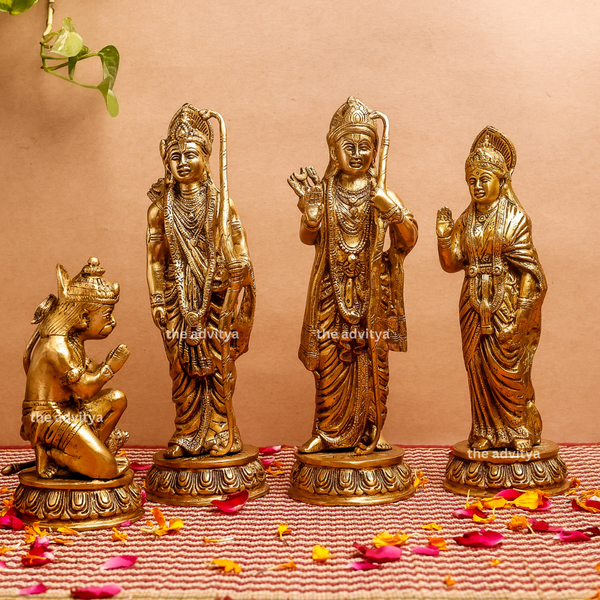
His Gaze (Most People Never Notice This)
Hanuman rarely looks directly at Ram. Instead, he gazes slightly downward.
Symbolism:
-
“I am not worthy of looking directly at my Lord.”
-
Pure, ego-less bhakti
-
The ideal disciple’s posture
This is one of the most profound hidden details in Ram Darbar iconography.
5. The Energy Geometry: Why the Arrangement Is Never Random
The four figures form a divine alignment:
-
Ram (center) = Dharma
-
Sita (left) = Compassion
-
Lakshman (right) = Duty
-
Hanuman (below) = Devotion
This creates a cosmic mandala, a perfect energy balance for homes and temples.
6. The Bow and Arrow - Symbols Beyond Warfare
Ram’s bow (Kodanda) carries spiritual meanings:
-
Focus: Your mind should be as straight as an arrow
-
Readiness: Protection of dharma is continuous
-
Balance: Strength without anger
The arrows are always bundled - signifying unity, direction, and clarity.
7. The Crown and Ornaments - More Than Decorative
Look closely at the crowns of the deities.
They signify:
-
Divine authority (kirita-mukuta)
-
Responsibility toward society
-
Purity of leadership
Even the detailing of jewellery carries shastric significance; specific patterns represent strength, purity, victory, and prosperity.
8. Feet Positioning, A Symbol Most Devotees Miss
Each deity’s feet tell a story:
-
Ram’s feet → well-grounded, suggesting stability
-
Sita’s feet → curved delicately, symbolising grace
-
Lakshman’s feet → slightly outward, indicating vigilance
-
Hanuman’s feet → small and humble, reflecting complete surrender
These fine details show why true dharma is lived through posture, not just words.
9. The Expressions: A Lesson in Emotional Mastery
The facial expressions are intentionally sculpted:
-
Ram → calm leadership
-
Sita → compassion
-
Lakshman → focus & discipline
-
Hanuman → devotion & humility
Together, they form a perfect emotional harmony, the ideal family dynamic.
Why These Hidden Details Matter
Understanding Ram Darbar iconography helps devotees:
-
connect more deeply
-
Place the idols correctly
-
feel the spiritual energy more strongly
-
appreciate the artistic and cultural heritage
A Ram Darbar idol is not merely a showpiece, it is a scripture carved in metal, resin, wood, or stone.
Vastu Insights: Best Placement for Ram Darbar Idols
If you’re planning to place or gift a Ram Darbar set:
-
Direction: Northeast (Ishan), East, or North
-
Height: Eye level or above
-
Surface: Clean, elevated platform
-
Avoid: bedrooms, directly on the floor, near footwear
Choosing the Right Ram Darbar God Idols
When selecting a Ram Darbar set for your home or as a gift:
Consider:
-
Material: Brass for auspiciousness, marble for purity, wood for warmth
-
Size: Small idols for offices/compact puja rooms, larger ones for home temples
-
Craft styles:
-
North Indian brass
-
South Indian bronze
-
Jaipur marble
-
Dhokra tribal metalwork
A well-crafted Hanuman murti adds powerful devotional energy to the set.
Why the Ram Darbar Is a Symbol of Divine Harmony
The Ram Darbar is more than a grouping of deities; it is the perfect representation of dharma, unity, family values, and spiritual balance. Every hidden detail, from posture to ornamentation, conveys a timeless teaching.
By understanding these elements, you experience your Ram Darbar god idols not as decor, but as a divine presence guiding your home, mind, and heart.
Key Takeaways
🔸 Ram’s calm posture represents strength rooted in peace
🔸 Sita’s left-side placement aligns with Vedic symbolism
🔸 Lakshman stands forward to signify protection
🔸 Hanuman’s gaze and posture reveal deepest devotion
🔸 The Darbar forms a cosmic energy alignment
🔸 Each ornament carries iconographic meaning
🔸 Ideal placement enhances positivity and Vastu harmony

